The CAD Software Landscape in 2026: Which One a Solo Operator Actually Needs
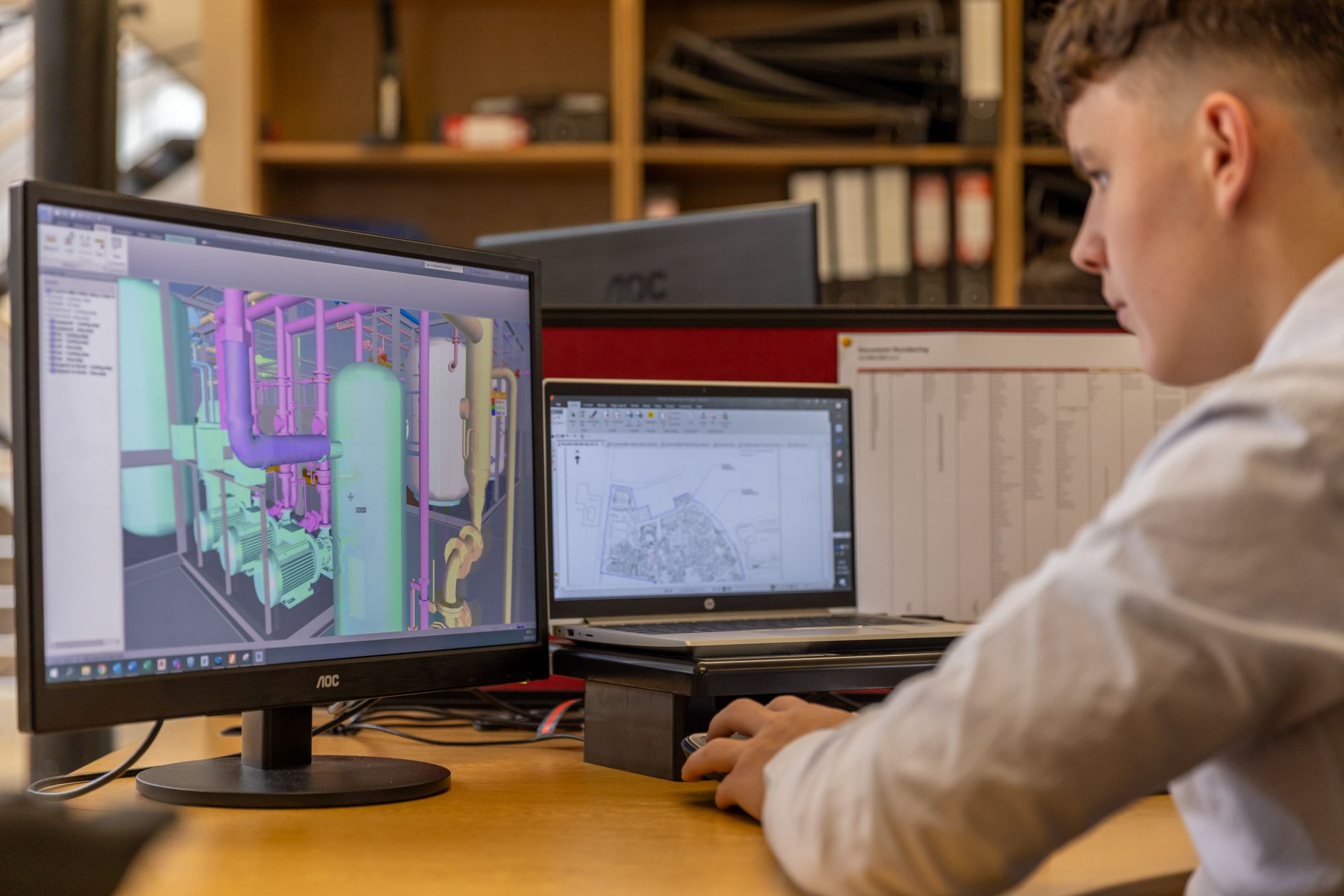
"Which CAD software?" is the wrong question. "Which CAD for this use case, at this budget?" is the right one, and the answer changes completely between product design, mechanical parts, architecture, and reverse engineering. Here is the landscape mapped the way it actually matters.
The map, by use case
| Use case | Tool that fits | 2026 cost | Why |
|---|---|---|---|
| Product / consumer design | Parametric (Solidworks-class) | $40-$80/mo | Design intent, DFM constraints |
| Mechanical parts / assembly | Parametric (Solidworks / Fusion) | $0 (Fusion free) - $80/mo | Assembly, mates, BOM |
| Architectural / BIM | Revit-class / Rhino | $25-$100/mo | Building model, not part model |
| Reverse engineering | Mesh→CAD (Geomagic-class) | $100-$300/mo | The scan-to-solid gap |
| Prototyping (fast, cheap) | Blender + 3D print | $0 | Form, not engineering intent |
The two traps
Trap 1: the brand reflex. Picking a tool because a client names it, when the work is the same. The deliverable (a solid, a BOM, a print file) is what the client buys; the brand is secondary and the cost is not.
Trap 2: the reverse-engineering overbuy. A $15,000 scanner is not the bottleneck of a reverse project; the mesh-to-solid cleanup is. The cheap scanner + the software subscription is the 80% solution that the $15,000 machine does not buy.
The solo operator's set
For a solo operator, the set is: a $0 parametric tool for parts, a $100-mo mesh-to-CAD for reverse work, and 3D printing for the physical proof. That is under $1,500 of hardware and $100/month, and it covers 90% of the solo CAD / reverse work that pays.
The reverse side: CAD reverse engineering tools. The 3D print side: which 3D printers to buy.